The new DfE guidance is out, here. The aim is to “prevent harm”. The rules are all stated in the form “thou shalt not…” There’s nothing wrong with any one of these rules; I support most of them. But … before we all settle back into our torpor, let’s think about why and what could have been.
Why?
Look at it through the lens of systems theory. Here’s a homeostatic organisation doing what it does best: inoculating itself against substantive change. The real aim isn’t to protect students, but to protect the system. Hobble AI sufficiently that it’s harder to learn from (removing personalities, for example, is being justified in much the same way as printing bibles only in Latin). Denature AI, and we can continue to muddle on with the current system – young people won’t realise the extent to which they’ve been had until they hit the real world and discover that the GCSEs, A-levels and degrees they thought were so important have become worthless.
The real message of this guidance: no way are we going to let a mere technological revolution change the way we’ve been doing things since 1870, just because it’s upending the rest of society.
What could have been, and should still be?
The DfE could, and should, have started with two observations:
In the age of AI, understanding still has value. Knowledge does not.
Given AI learning tools, didactic presentation becomes a waste of teachers’ time and an abuse of children’s attention.
Leading on from that, here’s the guidance I want to see the DfE publish:
Thou shalt:
Provide every student with an AI coach, actively monitored and supported by their teacher.
Increase student 1:1 time with teachers to 10 mins/day (from the current 1-2, depending on whom you ask)
Base an entirely new suite of qualifications on observed collaborations and monitored interactions with AI.
Offer qualifications based on demonstrating character (such as this.)
Thou shalt not:
have anything whatever to do with rote learning.
use content-based syllabi.
continue with the hopelessly-outdated GCSE and A-Level system.
mark student work by hand.
Honestly, what we’ve got with these guidelines is exactly what I expected. A competent job that doesn’t rock the boat. But that boat needs to be rocked. In fact, it needs to be tipped right over so the kids can discover they could actually swim all along. Let’s tip it together.
We all know that British education is in a mess, but recent discourse about how we got into this mess has tended to repeat the American discourse that schools were designed from the start to produce a literate, numerate, and above all, compliant workforce. Well, it wasn’t. Education Acts from 1833 to 1870 were driven by a mix of religious, social and economic agendas. A good understanding of how we actually dug ourselves into this mess may help us to dig our way out of it.
The essay that follows was written for me by Perplexity Deep Research and the image is by Midjourney.
The Educational Component of Early Factory Acts: Contemporary Motivations and Discourse
Introduction to Educational Reforms in 1833
The inclusion of educational provisions in the 1833 Factory Act marked a pivotal shift in the British state’s approach to child labour. For the first time, factory legislation mandated that children under 13 working in textile mills receive two hours of daily schooling, funded by factory owners[1][4][6]. This requirement, while modest, reflected a complex interplay of social, economic, and ideological forces. Contemporary sources—including parliamentary debates, reformers’ writings, and industrialists’ testimonies—reveal that the educational mandate emerged from a confluence of moral indoctrination, social control, and economic pragmatism, rather than a singular ideological driver.
Moral and Religious Imperatives in Early Educational Discourse
The Evangelical Influence on Reformers
Key proponents of the 1833 Act, such as Anthony Ashley-Cooper (Lord Shaftesbury) and Michael Sadler, framed education as a tool to rescue children from moral degradation. Shaftesbury, a devout Evangelical, argued that factory labour deprived children of “the means of grace and the hope of glory,” leaving them vulnerable to “vice and infidelity”[4][6]. This perspective aligned with broader Evangelical and Utilitarian movements that viewed education as a mechanism to instill:
Religious discipline: Sunday schools and factory schools emphasized Bible study and catechism to combat “heathenish” behaviour among working-class children[7].
Moral rectitude: Reformers like Richard Oastler condemned factory work for exposing children to “profane language” and “immoral influences,” asserting that schooling would cultivate “habits of order and decency”[4].
Parish Workhouses and the “Sin of Idleness”
Pre-industrial attitudes persisted among policymakers, who viewed child idleness as a moral hazard. John Locke’s 17th-century writings—still influential in the 1830s—argued that unemployed poor children were a “burden on the parish” and should be placed in “working schools” to learn industriousness[7]. The 1833 Act’s schooling requirement subtly advanced this ideology by structuring children’s time around a blend of labour and basic instruction, ensuring they remained “useful” to society[7].
Economic Pragmatism and Workforce Development
The Literacy Debate in Industrial Circles
Contrary to later claims of a deliberate “human capital” strategy, contemporary industrialists and politicians rarely cited literacy as essential for factory work. Andrew Ure, a prominent pro-manufacturing writer, dismissed advanced education for labourers as “wholly unnecessary” and potentially disruptive to factory discipline[3]. However, moderate reformers like Edwin Chadwick (a Utilitarian) advocated for basic arithmetic and reading skills to improve productivity in increasingly mechanized mills[6].
Reducing Child Labour to Elevate Adult Wages
Economic motivations intersected with educational policy through the Ten-Hour Movement, which sought to limit child labour to create jobs for adults. Nassau W. Senior, a political economist, argued in 1837 that operatives supported schooling mandates to “restrict the supply of juvenile labour” and thereby increase adult wages[3]. This view found partial validation in northern mill towns, where unions distributed pamphlets declaring: “Send the bairns to school, and their fathers shall reclaim their rightful bread”[5].
Social Control and Class Interests
The Ruling Class’s Fear of Unrest
The French Revolution and Chartist agitation loomed large in the minds of British elites. Peter Gaskell, a physician and social commentator, warned in 1836 that uneducated factory children would grow into “a dangerous populace—ignorant, turbulent, and depraved”[3]. Mandatory schooling, in this context, served as a prophylactic against radicalism by inculcating respect for authority and property.
Middle-Class Ideals Versus Working-Class Realities
While the middle class increasingly embraced childhood as a period of education and shelter, this ideal was not extended to working-class families without condition. William Cooke Taylor, a factory commissioner, noted in 1844 that reformers saw schooling as a way to “elevate” poor children to middle-class norms of “decency,” but only insofar as it did not impede their economic utility[5].
The Limits of Educational Reform
Token Compliance and Inadequate Implementation
Despite the 1833 Act’s ambitions, factory schools often amounted to “pretence education.” Inspectors reported cases where:
Mill owners hired barely literate workers to “teach” children in cramped, noisy factory corners[1].
Schooling time was deducted from children’s mealtimes or conducted at night after 12-hour shifts[6]. A Lancashire operative lamented in 1836: “The masters care nowt about larning. They’d sooner have a bairn minding a frame than puzzling over letters”[1].
Parental Resistance and Economic Necessity
Many working-class families opposed the schooling mandate, as children’s wages remained critical to household survival. In Leeds, parents protested that the Act “robs us of our children’s labour without giving us bread in return”[5]. This tension underscored the reform’s top-down nature, reflecting elite priorities rather than grassroots demand.
Conclusion: A Compromise Steeped in Contradiction
The educational provisions of the 1833 Factory Act emerged not from a coherent ideology but as a pragmatic compromise between competing interests:
Moral reformers sought to “Christianize” the working class.
Industrialists accepted limited schooling to forestall more radical labour restrictions.
Utilitarians viewed education as a tool for social stability. While the Act laid groundwork for later compulsory education laws, its immediate impact was constrained by economic realities and elite ambivalence toward empowering the poor. As Friedrich Engels observed in 1845, “The bourgeoisie makes laws to save the souls of factory children—provided it costs nothing”[5].
After 20 years of service to education, Yacapaca has now closed down. Thank you for your custom, your contribution, your enthusiasm, whatever it was you personally brought to Yacapaca. It’s been a great ride and I am grateful to have had your companionship.
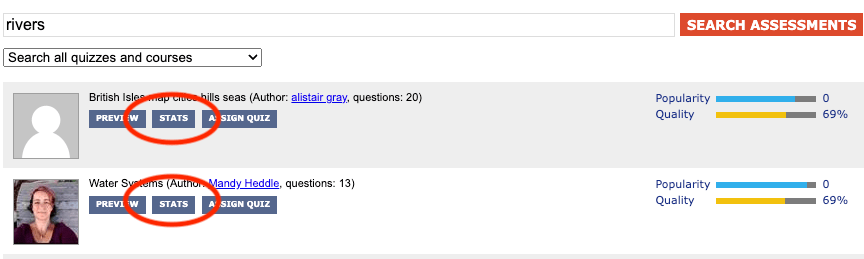
With Yacapaca approaching the end of its service, you may want to preserve the work you have put in over the years by export the assessments you have authored. Although there is no formal ‘export’ feature, there is an easy workaround using ChatGPT, and I have made a very short screencast to show you how:
You can also export any assessments you use or rely on, even if you are not the author, because they are all published under a Creative Commons sharealike license. The trick is to use the ‘Stats’ button, rather than the ‘Edit’ button.
With ChatGPT you can more than just export and tidy up a quiz. Here are some things I have experimented with:
Convert questions from multiple choice to cloze (gap fill) or vice-versa.
Extend the quiz with more similar questions, without having to write them!
Fix spelling or grammar issues (only in other authors’ quizzes, of course <ahem>).
Encode into specific formats required for import by other systems.
Add feedback statements for students.
Try it, and if you find a clever workaround, please add it in the comments below!
Sunset: Yacapaca will cease service at the end of August 2023, after a 20-year run. I want to briefly explain why, what users need to do about it, and what’s coming to replace it.
Why shut down?
Over the last few years, Google and Microsoft have come to dominate educational technology, squeezing out the independent providers. And in the last two months, new AIs such as ChatGPT have opened possibilities that every teacher will want to grasp – but that Yacapaca is structurally unsuited to supporting.
Do you need to do anything?
Download your records before the end of term, if you need them for next year. If you are a quiz author, export your quizzes; I will write a separate post on how to do that. If you are a subscription customer (thank you!), don’t worry, refunds will be available for anyone who does not want to cross-grade to the new system.
Yacapaca 2.0* is coming – want to try it?
Sunrise: I have spent the last few weeks feverishly building prototypes of a new assessment service for you, and it is ready now for the first few users to start experimenting with it. Here is what it’s like: when you see the process, it is quite magical.
You set up assignments through a simple chat interface. Just tell Y2.0 the topic, syllabus and class to be assessed. It will do the rest. Really.
Students see short-response or multiple-choice questions in a matching chat interface. They get instant marking and feedback, written for them personally by the underlying AI.
You get the results through your Google Classroom or Microsoft Teams for Education account, or by email if you prefer.
Be the first to try it out
Express your interest here, and I will add you to my email list. I can only work with a few teachers initially, but will progressively open out to new participants as the project matures. A few mockups of the student view below, to whet your appetite.
*it won’t be called that. Feel free to suggest a new name.





 Chalkface Blog