Category: Authoring

  • If you look in your gradebook for any given student set, you will see that all the results are reported in the grade scheme you chose for that set. It’s easy to take that for granted and not think about how it is achieved – at least I hope it is, because we have worked…

  • Checkbox questions (aka “choose-n”) are our second most-popular question type. They are simple and versatile, and you can often replace a whole list of choose-1 questions with a simple choose-n. They also contain a few booby-traps for the

  • When writing any part of a question, please think about timeframe, and the student’s perception of time. In the case of a feedback statement, you have perhaps 10-20s during which the student can remain focused on the current question and the issue of “why did I just get that wrong”? In this time, you can…

  • Beginners’ guide to Cloze questions

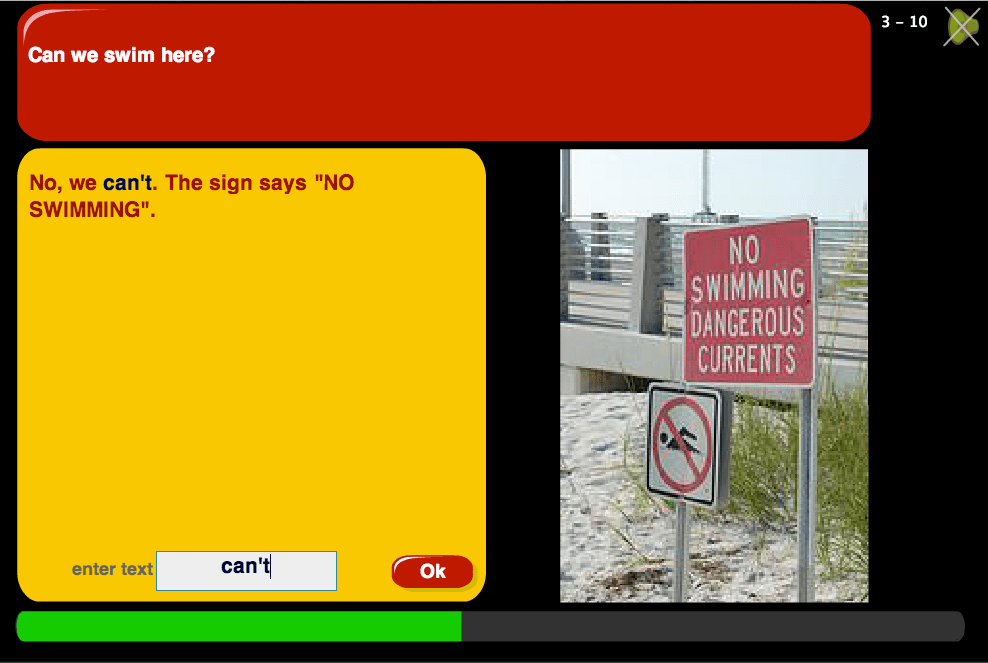
    Cloze or ‘gap fill’ questions are staple of language teaching, but they have many uses. For example: Vocabulary, especially in MFL Word suffix/prefix, e.g. in grammar or for chemical terms Numerical input Knowledge where correct spelling will be rewarded in an exam Where guessing would be too easy in a multiple choice question Yacapaca’s implementation of…

  • In Yacapaca, a course is basically a way to collate quizzes into a logical structure. It enables you to provide teachers’ notes and downloadable files such as lesson plans or worksheets. A course also has its own markbook, enabling teachers to see results grouped separately from other assignments should they wish to. What it’s not: a Yacapaca…