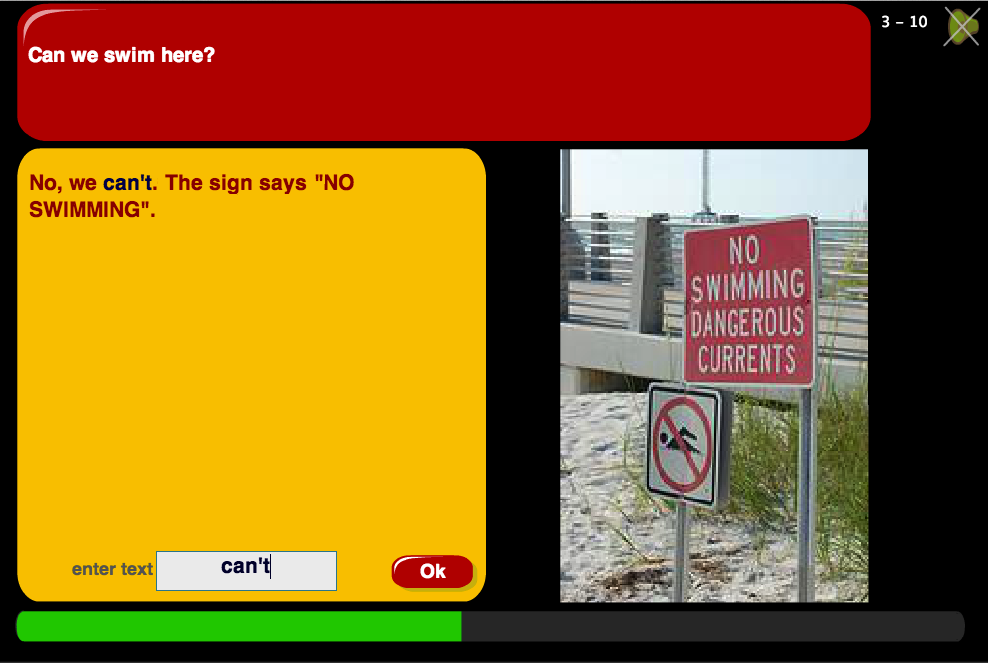
• Cloze or ‘gap fill’ questions are staple of language teaching, but they have many uses. For example:

    • Vocabulary, especially in MFL
    • Word suffix/prefix, e.g. in grammar or for chemical terms
    • Numerical input
    • Knowledge where correct spelling will be rewarded in an exam
    • Where guessing would be too easy in a multiple choice question

    Yacapaca’s implementation of Cloze is especially (more…)

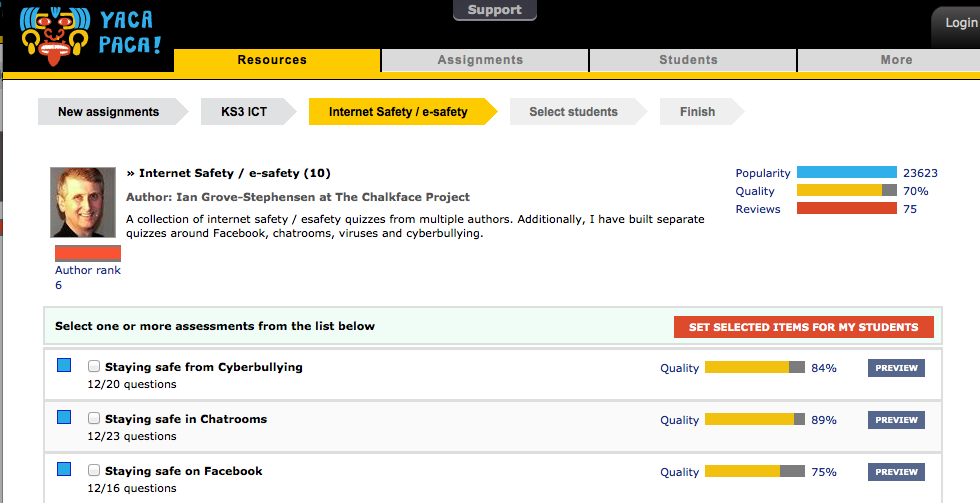
  • In Yacapaca, a course is basically a way to collate quizzes into a logical structure. It enables you to provide teachers’ notes and downloadable files such as lesson plans or worksheets. A course also has its own markbook, enabling teachers to see results grouped separately from other assignments should they wish to.

    What it’s not: a Yacapaca “course” is a completely different concept from something you would also find called a “course” in Moodle. Can’t really blame them for using the same name, but it hasn’t half caused a lot of confusion.

    Here is an example of what a teacher sees in a Course page…

    course1

    …but here is what the author sees…

    (more…)

  • A pre-test serves two functions, to provide a baseline from which to demonstrate progression, and as a planning tool to help you focus on the most-needed areas. We have just launched a really significant improvement on this latter function, that has the potential to make a real difference to the efficiency of your (and your colleagues’) teaching.

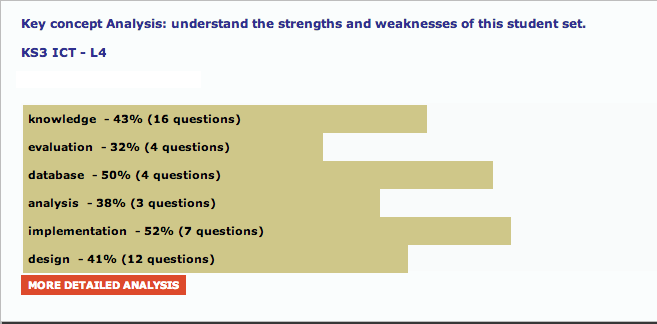
    Click on any quiz that has results in your Assignments List, and you get a very neat analysis of what your students do and don’t know, like this…

    The questions are grouped by up to 6 categories, and presented in a simple bar chart.

    Sometimes, though, it looks more like this… (more…)

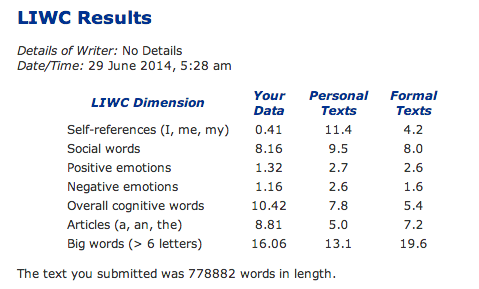
  • I have been experimenting this morning running Linguistic Inquiry and Word Count (LIWC) over students’ peer feedback responses. So far, all I’ve done is analyse the last 50,000 responses in aggregate, and only on a few dimensions. Here is what I found:

    Untitled 4

    The ‘personal’ and ‘formal’ columns are comparison averages generated by the system. I assume those are from bodies of text written by adults.

    What stands out to me is how much more (more…)

  • These are the absolute basic basics of how a “choose-one” type multiple choice question works, for new authors. Here is a typical question:

    The components are: the STEM (question); typically 4 OPTIONS (aka FOILS), comprising the KEY (the right answer) and 3 DISTRACTORS (the wrong answers).

    The stem (question). Make sure you (more…)