• Just over 10 years ago, BIll Gates had dinner with Tony Blair at 10 Downing St. His reward was that every secondary school was required to teach children to use the products of the Microsoft Corporation, under the subject heading of “ICT”. Because if an American tycoon says we need it, then obviously we do.

    Then last August, former Google boss Eric Schmidt came to London and gave a well-publicised speech criticising English education system for promoting his competitor’s products in our schools. And he had a point. His proposed solution, though, was as biased as the previous one: we should teach all young people computer science so they can go and work at Google.

    Now comes the bad bit. In a knee-jerk response, the Education Minister has today decreed that ICT is to be swept away and replaced by Computer Science in September. So we have eight months in which to retrain the 80% of ICT teachers who have no background in comp-sci, to write a new curriculum and devise new examinations – something that requires a lead time of at least two years.

    Personally, I’ll not be sorry to see the back of the old ICT curriculum. It does a fair job of equipping young people for the office jobs of the late 20th Century, but that is not going to be of service to many when they enter the world of work in 2015 or beyond.

    And I’ll be delighted to see a new emphasis on computing. Some students really get into it, and supporting their enthusiasm is a good investment for all of us.

    But what about those kids for whom computers, like cars, are just boxes with functions? They are never going to become computer engineers and I see no reason to beat them about the head with that. They would be better served by an up-to-date – in fact future-oriented – Computer Literacy course.

    We are not going to get that from Eric Schmidt, though, are we? Never mind; give it another decade and it will be Mark Zuckerberg’s turn. Let’s see what he tells us to do.

    Update: this excellent and considered response to the speech from Daniel Needlestone is well-worth reading.

    Update 2: two more good posts from Little Mavis and Zoe Ross.
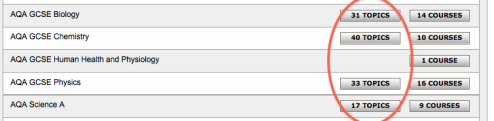
  • You may already have noticed the little ‘Topic’ buttons sprouting in the Yacapaca Resources list. We are progressively re-classifying all 15,000 quizzes by syllabus and topic to make it easier for you to find the assessment(s) you need.

    The feedback I’ve had from the beta-testers is that they have been stunned at how much content is actually available.

    We are classifying one syllabus per day. Here is what we have done as at time of writing (9/1/12)…

    Citizenship

    Geography

    History

    ICT

    Religion

    Science


  • This article has been getting a lot of comment in various forums. If you have not read it already, it’s well worth your time. For the last two decades now, the English educational system has been slavishly remodelled along American lines – despite the manifest failure of that country’s school system.

    Meanwhile the Finns, following an overtly Socialist agenda, find themselves topping the coveted PISA rankings as an accidental byproduct of their drive for educational equality.

    What frustrates me is that 20 years ago we were perfectly positioned to go exactly the same way as Finland:

    • Trust teachers to teach
    • Pay teachers what they are worth
    • Don’t interfere

    But we didn’t and the rest is history. Or rather not history, because the present government is actually extending the destructive policies of its predecessors.

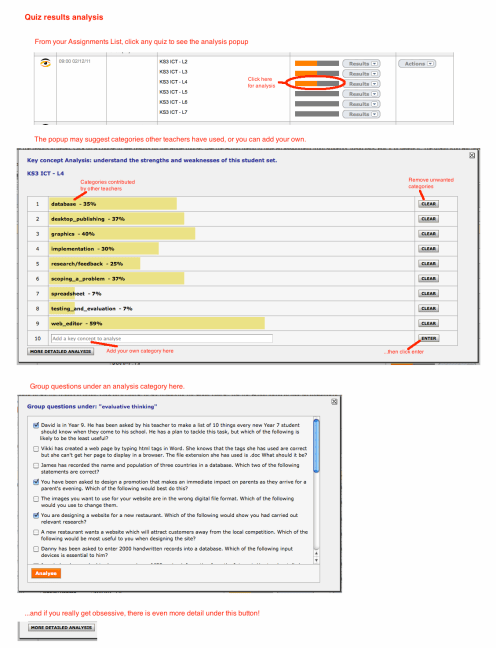
  • We are replacing the Tasks module that underpins Yacapaca ePortfolios and Short-text Tests with Quick Assignments.

    Why?

    Beyond a very small number of power-using enthusiasts, neither ePortfolios nor (more…)

  • We all love ‘inspiring teacher’ stories, and this one‘s a dilly. But see below for my awkward question:

    [Joni] Mitchell was drawn to art, but “growing up just at the time before arts were included as a part of education… at that time I was kind of a freak.” In seventh grade, she had “one radical teacher… a reverer of spirit… He criticized my habit of copying pictures. No one else did. They praised me as a prodigy for my technique. ‘You like to paint?’ he asked. I nodded. ‘If you can paint with a brush you can paint with words.’ He drew out my poetry. He was a great disciplinarian in his own punk style. We loved him… I wrote an epic poem in class – I labored to impress him. I got it back circled in red with ‘cliché, cliche.’ ‘White as newly fallen snow’ – ‘cliche’; ‘high upon a silver shadowed hill’ – ‘cliche.’ At the bottom he said, ‘Write about what you know, it’s more interesting.’” Mitchell talked about “going out after the rain and gathering tadpoles in an empty mayonnaise jar,” and he suggested she put her experience in writing. Mitchell’s debut album included a dedication to the teacher, “Mr. Kratzman, who taught me to love words.”

    So here is my question. When did you last make the time to be a Mr Kratsman for one of your students? And if you saw an opportunity, but did not take it, what was the more important use of your time that prevented you? Marking? Form-filling? Sitting in a meeting?

    Told you it was awkward.